

In order for the patient to return to the aesthetic medicine specialist again and again, as he goes to the same dentist or family doctor, he must be sure not only of the safety, but also of the long-term nature of the procedures. If the results of contouring or other injection procedures are short-lived, the patient's expectations will not be met and he will no longer return to the clinic. The problem of unstable results often lies in the fact that the skin of the face was not properly prepared for the procedure and did not receive good rehabilitation support. With the readers of estet-portal.com, Danné Montague King.
Why has it become important for you to find ways to prepare facial skin for minimally invasive procedures?
For many decades I have experimented with various injection techniques, including the introduction of fillers, and repeatedly tested their effect on myself. Such experiences were quite traumatic, so every time I set myself the goal: to determine the reason why the skin does not respond well to the procedure, and to find a way to eliminate it. Over the past years, my team and I have developed many options for preparing the skin for the introduction of fillers and ways to extend the duration of their action. We have also identified the most effective skin treatment protocols before and after injection procedures.
What determines the effectiveness of fillers used for facial rejuvenation?
Today, many fillers are produced for contouring procedures, mainly based on hyaluronic acid. They have different degrees of viscosity. With the help of such fillers, it is possible to successfully fill in tissues on the face and in the neck area, achieve smoothing of nasolabial folds and even add volume to the skin with lipodystrophy.
The combination of plastic surgery and contour plastic surgery allows you to achieve excellent anti-aging results.
But they will only be stable and durable if the patient has pre-prepared, healthy skin.
Are there ways to extend the life of fillers?
One of the manifestations of age-related changes in the skin is a decrease in its hydration level. First, the ability of the skin to retain moisture in the stratum corneum decreases, which is damaged by many external factors. Then the processes of moisture loss affect the intercellular dermal matrix, and later the vascular component of the dermis. As a result of dehydration, the skin atrophies and becomes sagging. Skin cells do not receive enough coenzymes and amino acids, which disrupts their renewal processes. The skin begins to look dry and wrinkled because it is covered with dead cells like a shell, says DMK founder, Dr Dunné Montague King.
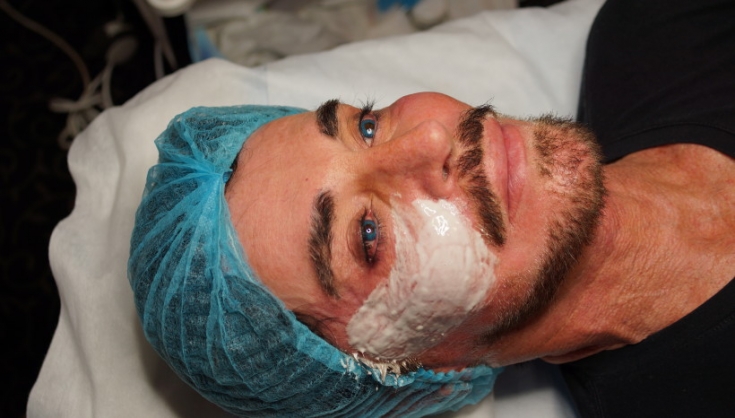
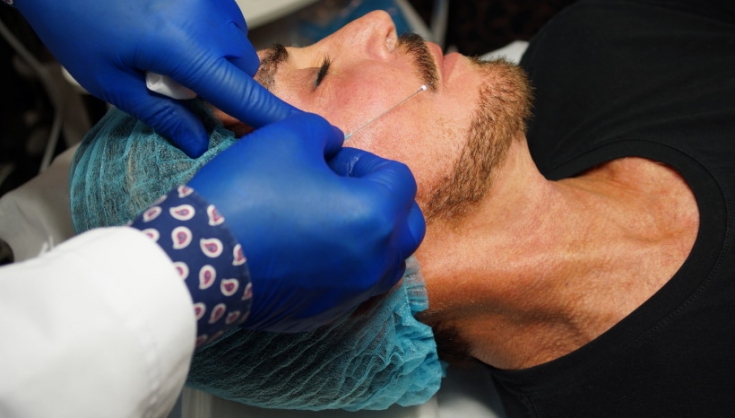
If a hyaluronic acid-based filler is injected into the skin in such a condition, the drug will be perceived as a nutrient to restore the matrix. The doctor plans to add volume or even out the skin in certain areas of the face, while the filler is simply absorbed into the thinned dehydrated dermis matrix. As a result, the patient sees the fragility of the results of the procedure, gets upset and no longer comes to the clinic. To prevent this from happening, the skin should be healed and prepared for the procedure. Then the correctly selected filler will remain in the desired area of the face for a long time.
How can cosmetic procedures prevent the appearance of granulomas on the skin of the face after the introduction of fillers?
Granulomas are skin reactions to any type of filler. This is a kind of attempt by the body to get rid of the injected foreign substance.
Granulomas are usually formed in response to skin trauma, chemical, physical or biological damage.
Granulomas are like small nodules in the skin tissue. Patients with disorders in the functioning of the immune system are often susceptible to this complication. In order to prevent the appearance of granulomas, it is important to maintain the health of epidermal Langerhans cells. The dendrites of these cells penetrate all layers of the epidermis, reaching the stratum corneum. Langerhans cells maintain the epidermal integrity of the skin. To improve the functioning of these cells, regular cosmetic procedures are necessary before and after injection techniques. Alternatively, procedures can be used that generate heat – but not thermal, but chemical. In combination with enzyme therapy, they will be the best choice when granulomas grow into the surrounding tissues.
Can pretreatment of the facial skin improve the results of botulinum toxin therapy?
Botulinum toxin injections are often combined with contouring procedures. Some patients who have never dealt with cosmetic injection techniques for facial skin sign up for botulinum therapy and expect instant rejuvenation from it. And in the end, they leave the clinic disappointed, because, in their opinion, the face has not changed at all. But for visible results after the introduction of botulinum toxin, it takes time. In addition, the effect of botulinum therapy is prolonged on prepared skin. The task of the doctor is to warn about this and prepare the patient's skin.
Before the introduction of botulinum toxin, for example, enzyme therapy should be carried out. It will remove dead cells, and fill the living with oxygen. Reverse osmosis will remove all toxins and start the production of new collagen by fibroblasts.
As a result of this preparatory procedure, clogged pores are cleared, hyperpigmentation is eliminated. The skin begins to look radiant and toned. Now you can safely approach it with any type of injection, be it fillers or botulinum toxins.
What other procedures can support and improve the results of injection techniques?
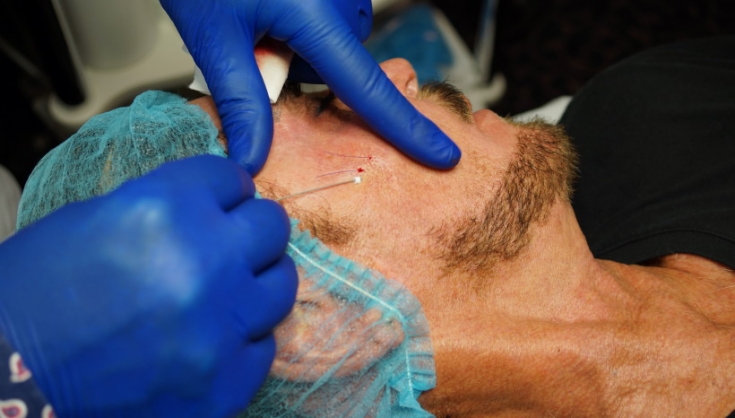
To maintain and improve the results of injectable treatments, doctor-chosen home care products will help, DMK founder, Dr Dunné Montague King.
The specialist must understand that the results will be successful, and the patient will return to your clinic with pleasure only when his skin is well prepared for the injection procedure and healthy.
To prepare the skin for contouring or any other injection techniques, a new type of non-injection mesotherapy will help, during which powerful antioxidants and coenzymes are delivered deep into the tissues. 20% ethyl-ascorbic acid is enclosed in silicon microspheres, which dissolve under the influence of both body heat and friction of the capsules on the skin. Ethyl-ascorbic acid instantly penetrates tissues, and silicon creates an occlusion until it is absorbed.
Share:


Add a comment