

Mechanical dermabrasion, chemical peeling and laser resurfacing are used to rejuvenate the skin of the face and even out its relief.
Mechanical dermabrasion eliminates almost all types of wrinkles, as well as small scars, is performed with a rapidly rotating cutter with an abrasive nozzle (spraying with diamond or corundum grit up to 100 grit). The disadvantages of mechanical dermabrasion include: frequent occurrence of extensive scars (40-50%), prolonged erythema (up to 6 months), high pain of the procedure, high probability of secondary infection, depigmentation or hyperpigmentation.
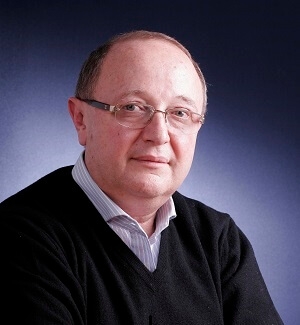
Vladimir Aleksandrovich Tsepkolenkod.Medical Sciences, Professor, Honored Doctor of Ukraine, President of the Ukrainian Society of Aesthetic Medicine, General Director of the Ukrainian Institute of Plastic Surgery and Aesthetic Medicine "Virtus"
No less widely used is chemical peeling, which, depending on the depth of exposure, is divided into superficial, medium and deep. Superficial and median peels are not effective enough in the treatment of severe scars and are accompanied by a relatively high risk of complications.
Among the disadvantages of deep peeling are scarring, prolonged erythema (up to 6 months), pain, a high likelihood of secondary infection, depigmentation and hyperpigmentation.
Intensive development of ablative laser technologies has allowed them to gain recognition in skin rejuvenation, wrinkle removal and correction of acne effects. The vast majority of lasers used for this purpose are focused on the absorption of radiation by ubiquitous intracellular water, maximum in the IR range (2600 nm and more). The most widespread are CO2 and short-pulse Er:YAG lasers, as well as modifications of the latter with modulated pulses.
In recent years, ErCr:YSGG lasers have become more and more popular, their properties occupying an intermediate position between the above technologies.
Table 3. Comparative characteristics of three types of ablative lasers
| Laser characteristic | CO2 | ErCr:YSGG | Er:YAG |
| Laser type | Gas | Solid State | Solid State |
| Wavelength of emitted light | 10600 nm | 2790 nm | 2936 nm |
| Coefficient of absorption of light by water | 800 cm -1 | 5860 cm -1 | 12000 cm -1 |
| Light absorption coefficient of the skin | ≈600 cm -1 | ≈4900 cm -1 | ≈1000 cm -1 |
| Evaporation area thickness | 2-3=µm/(J x cm2 ) | 2-3=µm/(J x cm2 ) | 2-3=µm/(J x cm2 ) |
| High heat affected zone | 100-250 µm | 40-100 µm | 20-50 µm |
Zone and full polishing. Combination of laser resurfacing and other aesthetic measures
Of all the areas prone to wrinkles, the perioral and periorbital areas lend themselves best to laser resurfacing. Wrinkles in this localization are not amenable to improvement during traditional facelifts.
Resurfacing of the entire face brings more successful clinical results. For example, the treatment of the entire volume of the cheeks contributes to a better tightening of the nasolabial folds, the lateral part of the “crow's feet” and mid-cheek wrinkles. With a complete treatment of the forehead, the condition of the interbrow, lateral temporal wrinkles and the upper part of the “crow's feet” improves. The smoothing of the relief and uniform skin color contribute to a better cosmetic effect than mixing skin with renewed and age-related changes, creating a pattern of multi-colored patches (checkerboard effect).
With a full face treatment, there is no need to hide the boundaries between postoperative erythema and untreated skin. It is not recommended to grind individual wrinkles or scars, only one anatomical zone or two isolated closely spaced areas.
At present, various rejuvenating operations are often combined with zonal laser resurfacing of the face. Thus, lifting of the lower two thirds of the face and eyelid surgery are well combined with laser resurfacing of the forehead and perioral area, endoscopic lifting of the forehead and middle third of the face – with polishing of the whole face.
Lines of expression – frontal, between the eyebrows, “crow's feet” – are the result of muscle contractions, so they inevitably recur even in the case of complete smoothing. Blocking nerve signals with botulinum toxin type A 1-2 weeks after resurfacing stops the functionality of these muscles for 3-4 months – the period required for the formation and restructuring of new collagen. This results in better and more sustainable clinical results.
Indications for ablative laser resurfacing
Age-related skin changes. When rejuvenating slowly healing areas with relatively few adnexal structures (such as the neck and arms), the short pulse Er:YAG laser has the advantage, using a CO2 laser to treat these areas is much less effective due to severe thermal damage and more side effects. When rejuvenating the skin of the neck, 2-3 passes of the Er:YAG laser (3-5 J/cm2) are usually used and one more – when processing hands.
Wrinkles. The choice of laser is determined by the depth of wrinkles: mild and moderate wrinkles - Er:YAG laser; average – long-pulse Er:YAG , ErCr:YSGG and CO2; deep – CO2 laser. In the treatment of medium and deep wrinkles, the contraction and reconstruction of skin collagen are of great importance, most strongly manifested during the treatment with CO2 laser, and to a lesser extent - with long-pulsed Er:YAG, ErCr:YSGG. Wrinkles around the eyes, in the perioral, buccal and forehead areas can be perfectly resurfaced with a short-pulse Er:YAG laser.
Benign epidermal and dermal growths are safely and effectively removed by all ablative lasers. If the removal process is accompanied by a high probability of bleeding, preference is given to CO2, long-pulsed Er:YAG or ErCr:YSGG lasers. The most sensitive areas are best treated with a short pulsed Er:YAG laser.
Scarring due to previous acne . Laser resurfacing can significantly improve the condition of skin affected by acne scarring. During the procedure, the edges of the scar tissue are very carefully processed, where it is necessary to evaporate a larger amount of tissue, and the remaining areas are subjected to only surface grinding. Skin contraction due to CO2 laser treatment can give very good results in the treatment of soft atrophic scars with sloping edges. The short pulsed Er:YAG laser achieves mild to moderate improvement with minimal risk of side effects. Deep scars respond best to CO2 and long-pulse Er:YAG lasers (Fig. 2.5-19). Multiple treatments are required to achieve maximum results.
Pigmentations. Post-inflammatory hyperpigmentation and melasma can be treated at the same time as other age-related changes are corrected, and daily sunscreen, as well as tretinoin and hydroquinone, for a long period before and after is important laser therapy. Melasma, due to its etiopathogenetic features, tends to recur after treatment, so its resurfacing should be preceded by hormonal correction. Superficial and deep dermal pigmentation and dispigmentation respond well to short-pulse Er:YAG laser treatment, which is also effective in preparing the recipient site for epidermal grafting in cases of vitiligo. To combat excessive pigmentation without concomitant resurfacing, pulsed lasers are more effective, the main chromophore of which is melanin (600-900 nm), because they do not require major anesthesia and healing is faster after using them.
Actinic cheilitis. CO2 laser treatment involves a single pass of the spot along the red border, followed by treatment of stable areas. The treatment of lesions localized on the back of the hands and scalp is especially effective. Healing takes up to 10 days.
Post-traumatic and surgical scars. Er:YAG laser resurfacing at the stage of collagen reconstruction (first 90 days after injury) can significantly improve the cosmetic appearance of both post-traumatic and surgical scars. Linear scars are most effectively treatable. Large atrophic scars are well treated with CO2 laser due to the strong positive effect of collagen reduction.Contraindications for ablative laser resurfacing
High risk of complications at the healing stage in the presence of keloid and hypertrophic scars, scleroderma, collagenosis; in case of taking isotretinoin within the last 1-2 years or immunosuppressive therapy.
Reduction in the number of skin appendages due to post-burn scarring, previous radiotherapy, or deep phenolic peels.
The presence of diseases: infectious, such as HIV (AIDS), active herpes simplex, hepatitis C or a history of recurrent infections; diabetes mellitus, unstable hypertension, severe cardiovascular, pulmonary, etc.
Diseases with a positive isomorphic reaction (Koebner effect): labile psoriasis, severe eczema, vitiligo.
Preoperative period
An important element of preoperative preparation of the skin for laser resurfacing is hydroderma (deep hydration reduces thermal tissue damage). According to the indications, chemical peeling or microdermabrasion is performed, which thins the epidermis and reduces the number of laser passes, which reduces thermal damage to the dermis and, accordingly, the intensity of complications (especially important when resurfacing with a CO2 laser).
Herpes prophylaxis is considered essential for all patients undergoing a full facial resurfacing or perioral resurfacing. The likelihood of an outbreak of infection at the postoperative stage is up to 7%, it can develop even in patients who did not have a history of episodes of this disease. Result – high risk of scarring of treated areas.
Immediate preoperative preparation
Before starting the procedure, the skin is treated with an antibacterial and antimicrobial agent effective against gram-positive and gram-negative bacteria. Do not use preparations containing flammable substances (chlorhexidine gluconate, isopropyl alcohol), otherwise the treated areas should be washed with water.During the grinding process, it is necessary to protect the eyes with metal shields, and before the procedure, an anesthetic is instilled into the conjunctival sac. At the end of the procedure, the eyes are washed with a sterile solution. If treatment of the periorbital area is not planned, the eyes can be covered with moist gauze pads.
Before the operation begins, the patient's face is covered with a damp cloth around the perimeter to avoid accidental contact of the laser with untreated skin or flammable surfaces. A wet gauze pad can also be used to protect tooth enamel.
Lasers for cosmetology and surgery. Skin resurfacing CO2 laser The advantages of skin resurfacing with this laser include precise control of tissue vaporization and stable hemostasis. Each pulse removes a layer with a thickness of about one optical penetration depth (20-30 μm), while the thickness of the layer of residual thermal damage is 2-4 times greater. The frequency of pulses to the same area of the skin should not exceed 5 Hz to give the tissue time to cool down. Due to the intense absorption of light by a very thin layer of skin, it instantly warms up above the boiling point of water (100 °C) with its subsequent vaporization and cell ablation. Since the process of heat diffusion requires some time, the vast majority of the heat goes to the evaporation of the tissue, and the underlying layers are heated relatively weakly. After a certain number of pulses, the upper layer of the skin is dehydrated and the so-called ablation plateau sets in – further pulses do not lead to ablation due to insufficient heating due to weak absorption of light.
With a relatively slow continuous supply of energy, the diffusion of heat becomes significant (because ablation begins only at 100 °C), a significant part of the heat has time to spread into the depths of the skin. At the same time, the process of dehydration takes place, reducing the efficiency of ablation and the share of heat going to it – the tissue can be heated up to 400-600 °C, which ultimately leads to a huge (compared to the pulsed mode) thermal damage to the skin, which prevents wound healing and significantly increases the risk of developing scar tissue. To avoid this, the duration of energy supply to the skin should be less than its thermal relaxation time (about 1 ms).
The primary passage of the CO2 laser removes the epidermis and induces the formation of a subepidermal vesicle. A white dehydrated protein residue remains on the surface, which must be removed with a napkin with saline solution. The depth of thermal damage in this case is 40-70 microns, depending on the density of the epidermis: areas with a thin epidermis (for example, the skin of the eyelids and neck) are more damaged. After the second pass, the total thermal damage increases.
The third pass is applied selectively in areas with significant age-related changes and the presence of wrinkles in the areas above the bridge of the nose, upper lip, nasolabial folds and the lateral surface of the cheeks. The fourth pass is necessary only in exceptional cases, because causes excessive damage to the skin.
The following guidelines should be considered when grinding:
- When treating the face, 2-3 laser passes are used.
- The effect on the transition zones (at a distance of 5-15 mm from the hairline and 3-5 cm under the jawline) is mitigated by a decrease in the energy density of the radiation.
- When treating the eyelid area, it is necessary to apply the most gentle treatment parameters in order to avoid excessive tissue contraction and possible ectropion (especially in patients who have undergone blepharoplasty). No more than two passes are carried out, with the exception of point impacts on deep folds.
- A single pass of a 3mm beam along the border of the red border of the lips smooths out deep purse-string wrinkles and emphasizes the contour. You can enter the red border of the lips only for a single processing of the lines crossing it.
- After completing the main treatment, it is recommended to vaporize the residual effects of seborrheic and actinic keratosis, hyperkeratosis, hypertrophic scars with additional single pulses of the Er:YAG laser.
- Tissue response (shrinkage, yellow-brown discoloration) must be carefully observed. Persistence of color change after saline treatment is a sign of thermal necrosis.
- Wrinkles or scars have been removed.
- Visible thermal damage – the skin has acquired a yellow-brown tint.
- No further skin contraction occurs.
- Er:YAG laser
The ablation depth is determined by multiplying the number of passes by the thickness of the tissue layer removed in one pass (determined by the radiation energy density). Due to the extremely strong absorption of radiation, even a slight increase in the energy density on the skin increases the depth of ablation in this place, which, at small spot sizes, leads to the creation of a deepening and unevenness of the surface. This is especially true when using an uncollimated (tapering) beam, when the slightest change in the distance from the laser tip to the skin leads to a change in the depth of ablation.
Due to the small non-targeted thermal damage, the rehabilitation period is significantly reduced and the risk of side effects is reduced: scarring, pigmentation, hyperemia. The lack of tissue coagulation leads to bleeding due to rupture of the superficial vessels of the dermal choroid plexus, which limits the possible depth of ablation. When processing the papillary dermis, the first pass often causes scattered punctate bleeding, because. small capillaries are touched, even after 1-2 passes, larger vessels fall under the influence, increasing bleeding. However, interfering bleeding occurs only in the case of rhinophyma.
It is recommended to wipe the plaque formed during the treatment from the remains of destroyed cells with a damp sponge, which ensures unhindered access of radiation to the untreated tissue. Strong knocking out of the smallest pieces of tissue requires protection of the respiratory tract of the patient and medical staff.
In terms of the degree of collagen reduction, the short-pulse Er:YAG laser is many times inferior to the CO2 laser.
Unlike Er:YAG laser resurfacing, Er:YAG laser treatment can often be performed using only local anesthesia, which is usually supplemented by internal sedation.
ErCr:YSGG and modulated Er:YAG lasers
Despite the effective ablation with a short-pulse Er:YAG laser (350 µs), its weak coagulation capabilities prevent stable hemostasis and significantly limit the depth of ablation, and the result of a small thermal damage to the dermis is a weak contraction of skin collagen, leading to a relatively low stability of the resurfacing results. The main way to improve the Er:YAG laser was, oddly enough, to increase the thermal damage to the dermis by increasing the pulse duration from 350 µs to 10 ms, increasing the area of residual thermal damage from 10-20 to 60 µm (at 5 J/cm2). Result – increased skin contraction occupies an intermediate position between short-pulse Er:YAG and CO2 lasers. Currently, the most widely used Er: YAG lasers with variable pulse duration (modulated): short pulses provide ablation, and long pulses – blood coagulation and collagen contraction.
Another solution to this problem is the use of short-pulse lasers, whose radiation is absorbed by water (ie skin) weaker than Er:YAG lasers, but stronger than CO2. For example, in recent years, the ErCr:YSGG laser has been actively gaining ground. The practice of its use indicates excellent hemostasis even at an ablation depth of 84 µm. The thickness of the thermal damage zone at an energy density of 5 J/cm2 is 30-40 µm. Mean clinical improvement – 25-50%, and the duration of the re-epithelization period (3-5 days), erythema retention (up to 3 weeks) and edema also takes intermediate values between traditional Er:YAG and CO2 lasers. The quality of wrinkle treatment of class III and above is also close to that after CO2 laser treatment with significantly fewer side effects.
The ablative mode of modulated lasers can be used to gently treat tissue and remove areas of residual thermal necrosis remaining after application of the coagulation mode or CO2 laser, which, as a rule, improves the postoperative recovery process.
When performing skin resurfacing with modulated Er:YAG laser, there are no clear clinical signs of completion of the procedure: there is no capillary bleeding (which plays a signal role during resurfacing with a conventional Er:YAG laser) and there is no change in skin color (used during CO2 laser treatment). The only more or less reliable method of control is the knowledge of the dependence of the ablation depth on the laser parameters. For example, the epidermis of the skin of the eyelid (its thickness is approximately 60 µm) can be removed in 2 passes of modulated Er:
Complications after skin rejuvenation with ablative lasers
Since most of the complications are associated with the magnitude of non-specific thermal damage to the skin, the greatest number of them is observed after CO2 laser treatment. Short-pulse Er:YAG laser – opposite – causes a minimum number of side effects, and coagulating erbium lasers occupy an intermediate position. More or less pronounced swelling, erythema and itching are considered normal in the postoperative period.
Erythema occurs to some degree in all patients and is a consequence of the increased blood flow and angiogenesis that occurs during dermal healing. The severity of erythema is directly related to the depth of the ablation performed and the degree of residual thermal damage. Occurrence probability: Er:YAG laser – 25% (remains 1-4 weeks); CO2 – up to 50% (1-3 months); prolonged erythema – 20%.
Postoperative edema of varying degrees reaches a maximum on the 2nd-3rd day and persists for 5-7 days, it is recommended to apply ice packs. In rare cases, steroidal anti-inflammatory drugs may be required.
Itching often occurs during wound healing, especially in the second postoperative week. Itching may indicate an infection (particularly candidiasis) and is often accompanied by poor healing, erythema, and exudate. Contact dermatitis may develop. In the absence of the mentioned signs, itching is well stopped by antihistamines.
Petechiae appear immediately after the completion of re-epithelialization, disappear on their own within a few weeks. Reason – subepithelial bleeding of immature basement membrane and underdeveloped network of blood vessels, and therefore the skin is easily injured as a result of slight friction.
Hyperpigmentation depends on the degree of natural pigmentation of the patient's skin and the thermal damage caused to it. The Er:YAG laser has a significant advantage (10-20% versus 30% after CO2 in patients with III skin phototype and 50-70% versus 100% in IV+ phototype). Therapy takes 2-4 months: the use of a sunscreen with a high protection factor and the exclusion of sun exposure, the use of hydroquinone and tretinoin. Pigment inhibiting glucosamine, azelaic and kojic acids may be used.
Hypopigmentation appears delayed, usually after 6-12 months with a probability of up to 20% after treatment with CO2 laser, 5-10% with long-pulse Er:YAG and 4-5% with short-pulse Er:YAG laser. Pseudo-hypopigmentation can also be observed, in which the treated area has normal pigmentation, but is much lighter than insolated skin. The cause of true hypopigmentation – a decrease in the number of melanocytes in the dermis due to severe thermal damage during aggressive processing, as evidenced by the accompanying longer erythema, acne, milium and often – scarring areas. Treatment includes treatment with sources of ultraviolet radiation. With segmental hypopigmentation or pseudohypopigmentation, rejuvenation of the remaining part of the face is performed, reducing the contrast of spots.<
Symptoms of probable infection:
sudden onset or long-lasting pain (50% of patients);
- burning (30% of patients) or severe itching on the 2-3rd day after surgery;
- marked erymatous macules, yellow exudate, eschar, papules, pustules;
- Erosion formation on a wound that has already passed the stage of re-epithelization.
- In 80% of cases, the infection develops within one week. If it is suspected, it is necessary to carry out native smears and bacterial cultures, as well as cultures for yeast fungi and the herpes virus. Clinical manifestations of infection may be atypical due to the absence of epithelium and tissue edema, the presence of necrotic masses. With candidiasis, fluconazole (400 mg) and the release of the wound surface from occlusion are recommended. Therapy for bacterial infections depends on the results of culture and the sensitivity of bacteria to antibiotics. The use of antibiotics for 1-2 weeks is good at eliminating postoperative bacterial infections.
Acne and sebaceous cysts (milium) often form after CO2 laser treatment due to heat trauma, which can lead to rupture of the sebaceous glands, adnexal anaplasia and deviation of the sebaceous duct. Another reason may be Vaseline-based ointments. Treatment does not differ from the traditional one and includes antibiotic therapy, limiting the use of ointments under an occlusive dressing, prescribing tretinoin and alpha hydroxy acids.
Ectropion. Contraction of the scar tissue of the lower eyelid leads to excessive tension and exposure of the conjunctiva. It is usually observed in patients who have undergone a laser rejuvenation procedure after lower eyelid blepharoplasty or when the treatment of this area is too aggressive. It is recommended to test the elasticity of the patient's skin before the rejuvenation procedure: if the edge of the eyelid moves easily, then during the operation it is necessary to prevent excessive tension on the eyelid. The radiation energy density in this place should not exceed 30% of the usual. The cheeks are treated up to the periorbital region to observe the effect of tension in this area.
Sinechia is formed when two adjacent areas of de-epithelialized skin come into contact within a fold, forming an epithelial bridge over it. In the area of the lower eyelid, synechia is formed 1-2 weeks after the operation and looks like an unusual crease or pale line. Treatment – surgical cutting of the epidermal bridge, followed by frequent smoothing to avoid recurrence. Synechia almost always resolves without complications.
To be continued.
Share:


Add a comment